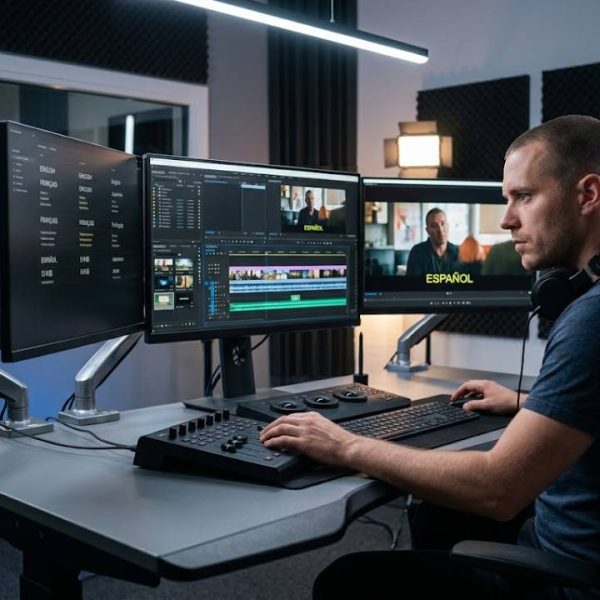
When a hit show launches on a global streaming platform, it rarely appears in just one language. Behind the scenes, a coordinated pipeline of translators, timing specialists, and quality reviewers works to get subtitles live in dozens of markets within days of release. The scale of this operation means platforms increasingly rely on structured translation workflows rather than ad hoc freelance work.
Why subtitle quality varies so much by language pair
Viewers often notice that some language versions read more naturally than others. Content bound for Eastern Europe frequently needs a dedicated russian english translation pass before it reaches a regional subtitling vendor, since idioms and cultural references rarely map directly between languages. Rushed timelines can lead to literal translations that lose the original tone of a scene.
Growing demand from Ukrainian-speaking audiences
As streaming catalogs expand into new territories, platforms have invested heavily in reaching Ukrainian-speaking viewers. Finding a reliable english to ukrainian translator familiar with entertainment content, rather than only legal or technical material, has become a competitive advantage for studios releasing content simultaneously across regions.
The software behind subtitle production
Most subtitling teams work inside specialized software rather than plain text editors. A cat editor helps translators reuse previously approved lines, maintain consistent character names, and flag timing conflicts automatically, which matters enormously when a series runs for multiple seasons and dozens of episodes.
Balancing speed and accuracy
Streaming platforms compete on how quickly new content becomes available worldwide, which puts constant pressure on translation teams. According to Translators without Borders, quality assurance steps are often the first casualty when deadlines tighten, which is why leading platforms now build in mandatory review passes rather than relying solely on first-draft translations.
Dubbing versus subtitling decisions
Not every market prefers subtitles. Some regions favor full dubbing, which requires an entirely separate production pipeline involving voice casting and lip-sync adjustments. Platforms increasingly test both formats in a given market before committing to one, using viewer completion rates as the deciding metric.
What smaller studios can learn from this model
Independent studios releasing content internationally do not need the same scale of infrastructure, but the underlying lesson holds: treating translation as a planned production step, rather than an afterthought before launch, consistently produces better viewer reception and fewer costly corrections after release.
How viewer feedback shapes translation priorities
Streaming platforms track subtitle-related complaints as closely as they track playback errors. A spike in negative reviews mentioning "translation" or "subtitles" for a specific title often triggers an emergency revision cycle, sometimes replacing an entire language track within days of a controversial release. This feedback loop has made translation quality a measurable part of content performance rather than a purely creative afterthought.
Managing subtitles at scale is really a question of how much attention a viewer has left over, since reading and watching compete for the same bandwidth. Platforms solve it by keeping everything else in the frame as undemanding as possible, including the sound. That is one reason lo fi music became the default background for anything people do while also doing something else — it is engineered not to ask for attention.
Managing dozens of language tracks at once is a logistics problem before it is a linguistic one. Platforms that do it well treat subtitling services as a scheduled production line with fixed quality gates, not as something bolted on after the final cut. Their cost structure ends up looking very different from that of a studio ordering language by language.
The business side of that expansion is easy to underestimate, because subtitle pipelines sit alongside contracts, licensing paperwork and marketing copy that all need the same consistency. UK media companies entering Arabic-speaking markets often adapt a business translation services checklist to keep those workstreams aligned. It assigns an owner, an approved glossary and a review step to each document type before launch deadlines start dictating shortcuts.
Regional slang and generational differences
A script full of teenage slang in the source language poses a unique challenge for translators working across age groups and regions. What reads as natural dialogue to a younger audience in one country can feel stilted or outdated once translated literally, so many platforms now employ younger reviewers specifically to catch generational mismatches before a season goes live.
The economics of scale
Translating a single episode into thirty languages multiplies costs quickly, which is why platforms negotiate long-term contracts with translation vendors rather than paying per project. These arrangements often include volume discounts tied to guaranteed turnaround times, giving vendors an incentive to invest in better tooling and training for their translator pools.
Training translators for entertainment content specifically
Legal and medical translation demand precision above all else, but entertainment translation requires a different skill set entirely: the ability to preserve humor, rhythm, and emotional tone while still fitting within strict character-count limits per subtitle line. Many vendors now run dedicated entertainment-translation tracks to train specialists separately from their general-purpose linguist pool, recognizing that a translator excellent at technical manuals may struggle with comedic timing.
What happens when translation goes wrong publicly
Occasionally a poorly translated subtitle line goes viral for the wrong reasons, embarrassing a platform in front of millions of viewers. These incidents have pushed several major services to add a final native-speaker review stage specifically for high-profile releases, even when it means delaying a simultaneous global launch by a day or two to avoid a costly public misstep.
Looking ahead as catalogs keep growing
As streaming libraries continue expanding into new regions, the volume of content requiring translation will only increase. Platforms that treat their translation infrastructure as a strategic asset, rather than a last-minute vendor relationship, are likely to see faster international launches and fewer costly quality issues as their catalogs scale further.
A quieter but essential part of global entertainment
Viewers rarely think about the translation work behind a favorite show unless something goes wrong, which is exactly the outcome the best teams aim for. Seamless subtitles that never draw attention to themselves represent the highest standard of the craft, and achieving that consistently across dozens of languages remains one of the more underappreciated engineering challenges in modern entertainment.